

There is a weird thing we do in recruitment marketing.
We find one channel that works and then immediately ask it to do everything.
Need more applicants? Turn up the job boards.
Need more passive candidates? Post more on social.
Need more employer brand? Create more content.
Need more reach? Boost the post.
And then, six months later, we’re wondering why the whole thing feels like we’re trying to drive a car with one wheel.
Your job distribution strategy needs more than one engine.
Because different channels do different jobs.
Some are built to reach people who are already looking.
Some are built to reach people who aren't.
Some create awareness.
Some create consideration.
Some put a specific job in front of a specific audience.
And some put your employer brand in places where your audience is already spending time.
That's not redundancy.
That's strategy.
Think beyond the job board
The traditional recruitment funnel assumes someone starts with a job.
They search.
They find your posting.
They click.
They apply.
Simple enough.
Except a massive portion of the workforce isn't starting there.
They're scrolling TikTok.
They're watching Instagram.
They're reading LinkedIn.
They're following creators.
They're talking to friends.
They're consuming content about careers, money, work and life.
And occasionally, something makes them stop.
"Huh. I didn't know they were hiring for that."
That's job discovery.
And if your distribution strategy only shows up when someone types the right keywords into the right search bar, you're leaving a lot of discovery on the table.
This is where different engines start to matter
Take social recruiting.
Platforms like Adway are designed to turn open jobs into targeted social campaigns, reaching candidates where they already spend time and using automated targeting to find people who may not be actively searching.
That's powerful.
But it's not the only way to distribute a job.
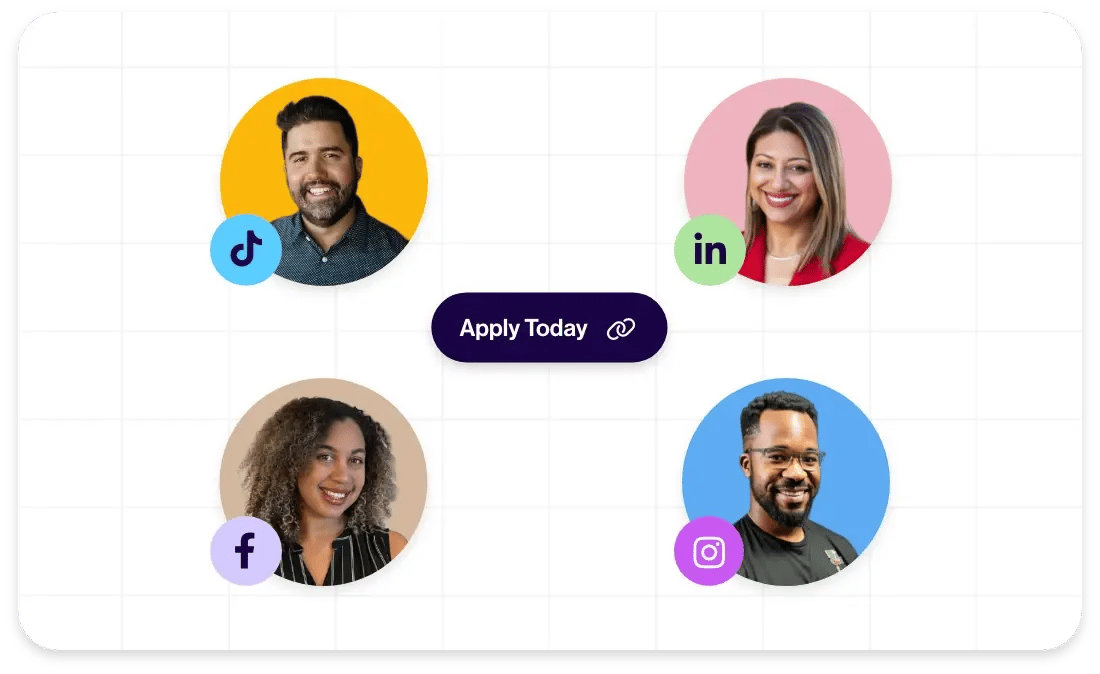
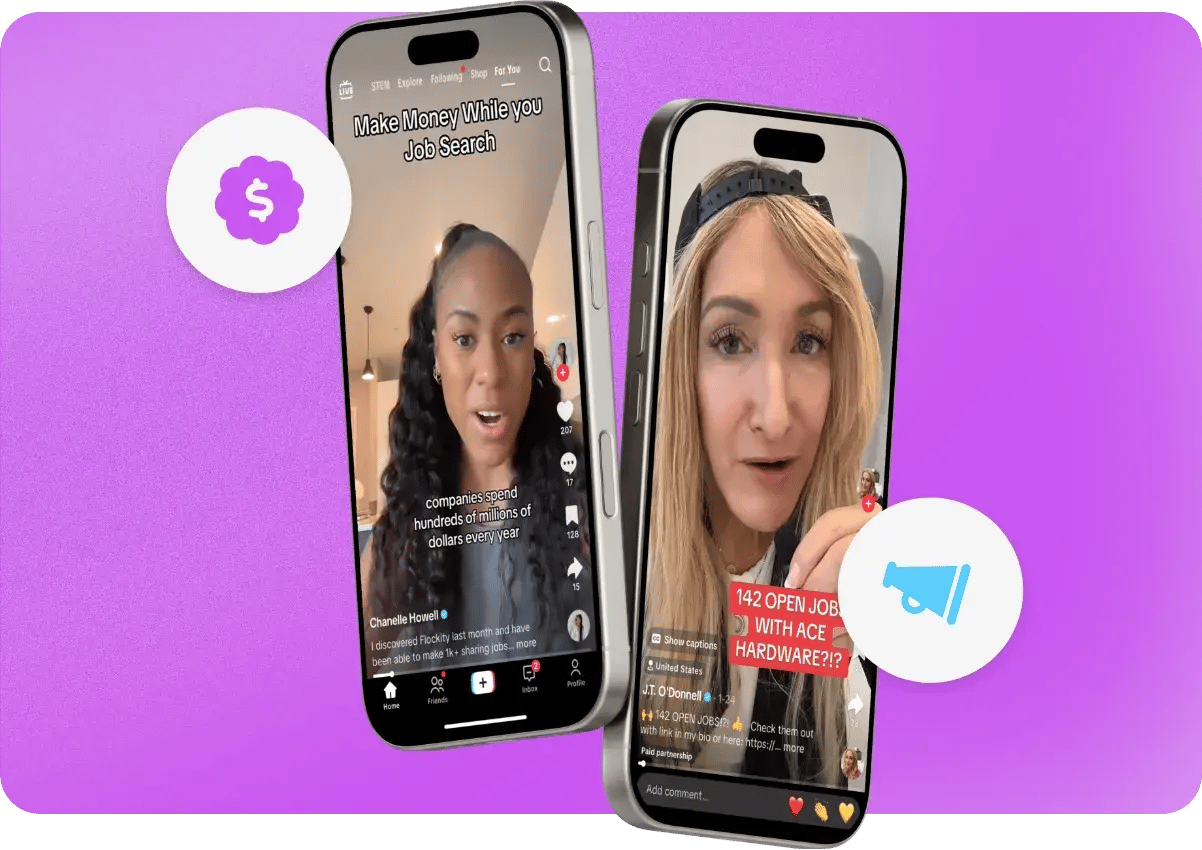
Flockity approaches the problem from a different direction: trusted people.
Instead of relying entirely on paid distribution, Flockity puts jobs into the hands of creators who already have relationships with audiences around work, careers and specific industries.
The difference matters.
Because an algorithm can decide what someone sees.
But a person they trust can give them a reason to care.
These aren't competing ideas. They're different engines.
And the opportunity is figuring out how they work together.
Stop looking for the one magic channel
This is where recruitment marketing can get a little obsessed with the answer.
What's the best channel?
What's the best platform?
What's the best campaign?
What's the best source?
But there probably isn't one.
The better question is:
What combination of distribution gets our opportunities in front of more of the right people?
Maybe paid social creates scale.
Maybe creators create trust.
Maybe employees create authenticity.
Maybe search captures active intent.
Maybe your careers site converts that interest.
Maybe email nurtures people who already know you.
Maybe retargeting brings someone back when the timing is right.
Now you're not running a collection of disconnected campaigns.
You're building a distribution system.
And this gets even more important when you have hundreds of jobs
If you're hiring for 500 roles, you don't want 500 marketing strategies.
You want an ecosystem that can distribute those opportunities through multiple engines.
Because the job will change.
The audience will change.
The creator will change.
The channel will change.
The message will change.
But the distribution infrastructure keeps working.
That's the shift.
Stop asking, "How do we market this job?"
Start asking:
"How do we make sure the right people have a chance to discover our jobs?"
That's a much bigger question.
And frankly, it's a much more interesting one.
Because the future of recruitment marketing isn't about finding one perfect channel.
It's about building enough distribution that your opportunities become increasingly difficult to miss.