

We love to say there aren't enough candidates.
Not enough nurses.
Not enough engineers.
Not enough truck drivers.
Not enough people willing to work weekends.
Not enough people with the right skills.
And sometimes, sure. The talent pool for a particular role really is small.
But before you declare a candidate shortage, there's another question worth asking:
How many of the people who could be great candidates ever saw the opportunity?
Because those are two very different problems.
One is a talent shortage.
The other is a distribution gap.
We're still waiting for people to come looking.
Traditional recruiting has trained us to think candidates will find us.
They'll search the job board.
They'll visit the careers site.
They'll see the LinkedIn post.
They'll get the recruiter's message.
And if they're interested, they'll apply.
But what about the enormous population of people who aren't doing any of those things?
They're working.
They're raising kids.
They're commuting.
They're watching TikTok.
They're scrolling Instagram.
They're catching up on LinkedIn.
They're following creators.
They're living their lives.
They aren't searching for your job.
That doesn't mean they wouldn't want it.
It means they haven't discovered it.
Discovery changes the equation.
Think about how you discover almost everything else.
You weren't necessarily searching for the restaurant you went to last weekend.
You didn't wake up intending to buy the thing you saw on Instagram.
You weren't researching a new podcast until someone you follow mentioned it.
You discovered it.
And suddenly, you were interested.
Jobs can work the same way.
Someone can be perfectly happy in their current role and still stop scrolling when they see an opportunity that makes them think:
Wait. That's actually interesting.
That's job discovery.
And it requires a very different recruitment marketing mindset.
Your jobs need to travel further than your career site.
This is particularly important for employers with hundreds or thousands of open roles.
If you're hiring at that scale, your distribution strategy can't depend entirely on people finding your jobs.
You need to create more ways for those jobs to find them.
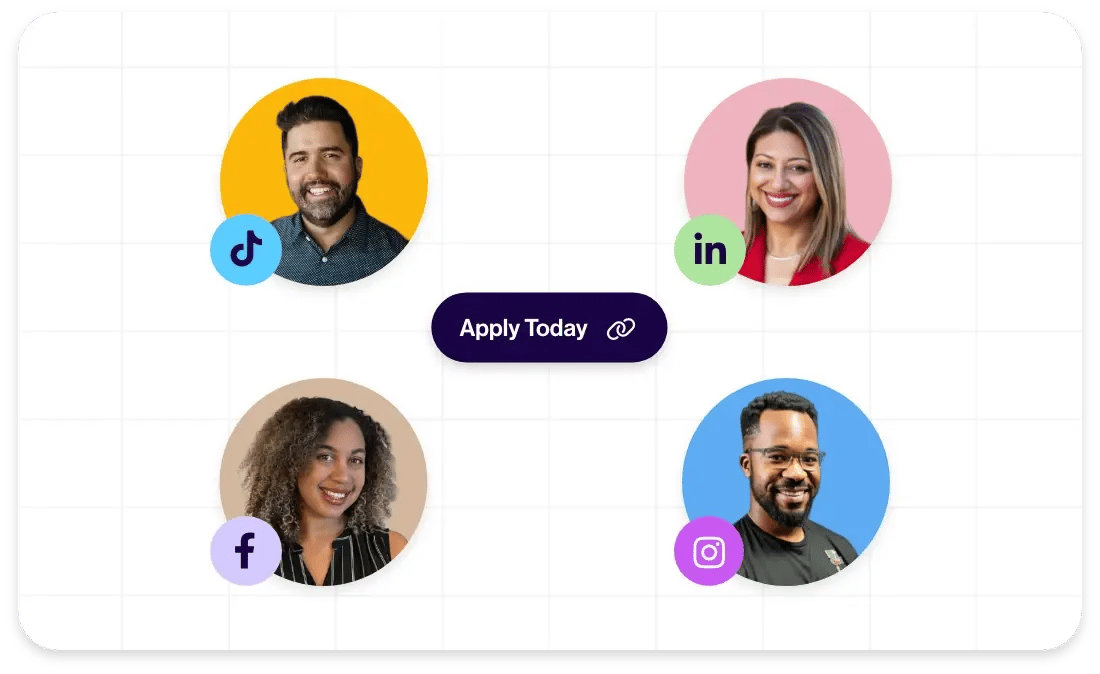
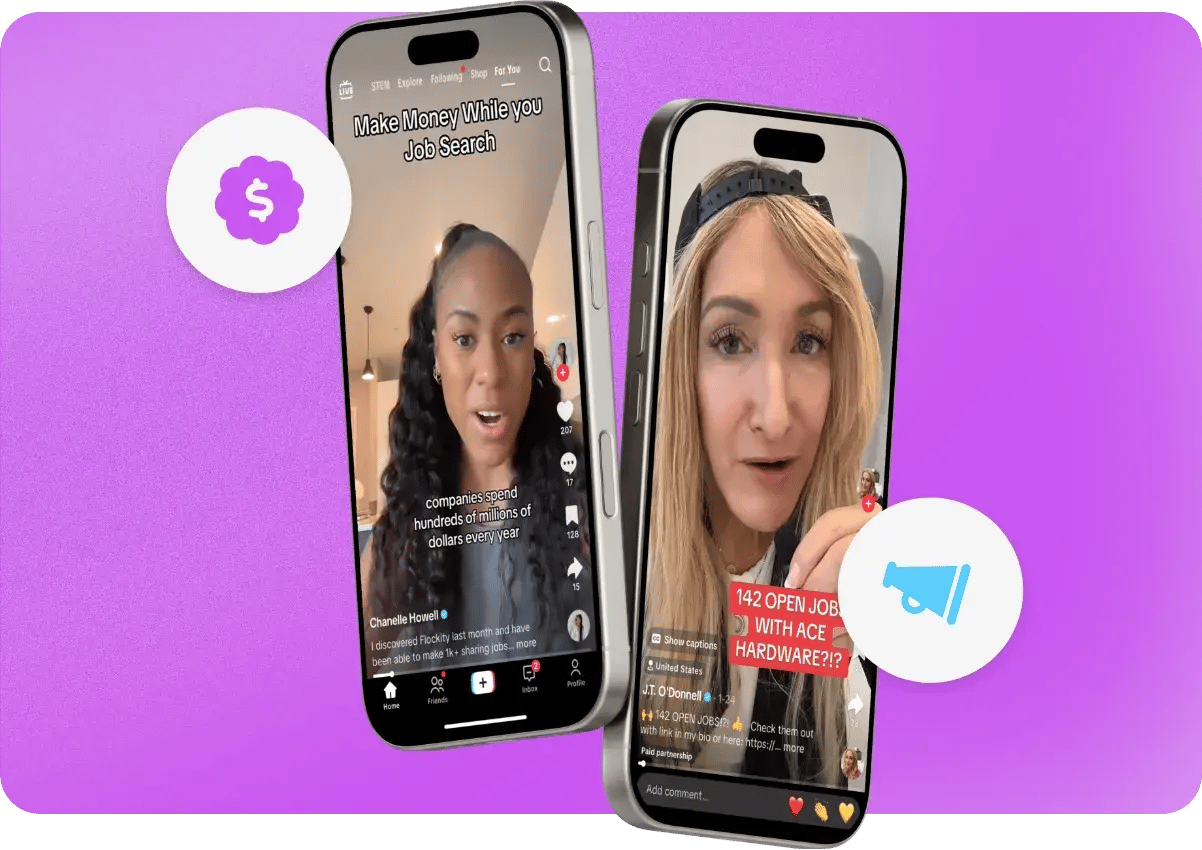
That might mean creators sharing opportunities with their audiences.
It might mean paid social campaigns reaching passive talent.
It might mean employees telling stories about what it's actually like to work there.
It might mean communities sharing opportunities with people who trust them.
It might mean employer-brand content that gets someone interested in the company before they're interested in a particular job.
There isn't one magic channel.
There shouldn't be.
Different distribution engines do different jobs.
This is where the recruitment marketing ecosystem gets interesting.
Take social recruiting.
Platforms like Adway are built around using AI-driven social recruiting to turn open jobs into always-on social campaigns that reach passive candidates across channels such as Meta, LinkedIn, TikTok and Snapchat.
Flockity approaches the same larger problem from a different direction: trusted people.
Instead of relying solely on a brand or an ad to introduce an opportunity, creators can put jobs in front of audiences that already listen to them.
One approach uses technology and targeting to expand distribution.
The other uses people and trust to expand discovery.
They're different mechanisms.
But they're solving the same fundamental problem:
How do we get opportunities in front of people who aren't looking for them?
And this is where “candidate shortage” starts to look different.
Imagine you have 1,000 open jobs.
You post them.
You wait.
A relatively small percentage of the working population actively searches for those jobs.
Then you conclude:
“There aren't enough candidates.”
But what if your first problem wasn't supply?
What if it was that you only put those opportunities in front of the people already looking?
You've optimized the bottom of the funnel while ignoring the enormous audience at the top.
That's a distribution gap.
And you can't solve a distribution gap by posting the same job in more places and hoping for a different result.
You have to expand the number of ways people can discover you.
Stop asking where candidates are looking.
Start asking where they are spending their attention.
This is one of the biggest shifts happening in recruitment marketing.
The question used to be:
“Where do candidates search for jobs?”
Now we also need to ask:
“Where do people discover things?”
Because those aren't the same places.
And increasingly, the most interesting talent may never type your job title into a search bar.
They may discover your employer through a creator.
A video.
An employee story.
A social ad.
A conversation.
A piece of content that happened to land in their feed at exactly the right moment.
Then they think:
Huh. Maybe I should take a look.
That's the moment recruitment marketing should be creating.
You don't need to reach everyone.
You need to create more opportunities to be discovered by the right people.
That's the real opportunity.
Not blasting every job to the biggest possible audience.
Not chasing impressions for the sake of impressions.
Not declaring a talent shortage every time a requisition is difficult to fill.
Instead:
Expand your distribution.
Experiment with new audiences.
Use more than one engine.
Learn what creates discovery.
And keep doing it across your entire hiring portfolio—not one requisition at a time.
Because maybe the problem isn't that the people you need don't exist.
Maybe they just haven't met your jobs yet.