

Every talent acquisition leader knows the pressure: critical roles remain open, competition for qualified candidates intensifies, and recruiting budgets are expected to deliver more. The instinct is often to optimize what already exists. Refine the targeting. Improve the job description. Adjust the media mix. Find efficiencies in the channels that have always powered recruiting.
Those efforts matter. But sometimes the challenge isn't how efficiently you're reaching candidates. It's whether you're reaching enough of the right people in the first place.
Recruiting has become exceptionally good at capturing existing demand. Job boards connect employers with active candidates. Search-based advertising helps people find relevant opportunities. Programmatic campaigns distribute jobs across digital channels. These tools play important roles in a modern talent acquisition strategy, and employers shouldn't overlook their value.
But what happens when the same channels aren't producing enough qualified candidates? What happens when a specialized role attracts too little interest, when competition for experienced professionals drives up costs, or when an employer struggles to stand out in a crowded market? At some point, improving the mechanics of an existing strategy may not solve the underlying problem.
The missing piece may be reach.
Consider how consumer brands approach growth. They don't focus exclusively on people who are already shopping for their products. They invest in introducing themselves to new audiences, building familiarity, and earning consideration before a purchase is imminent. They recognize that future demand depends, in part, on who knows they exist today.
Recruiting can benefit from the same perspective. A professional doesn't have to be actively searching for a job to become a future candidate. They may be open to learning about a new employer, curious about a different career path, or willing to consider an opportunity if the right one appears. But if they never encounter that opportunity, the possibility of consideration never begins.
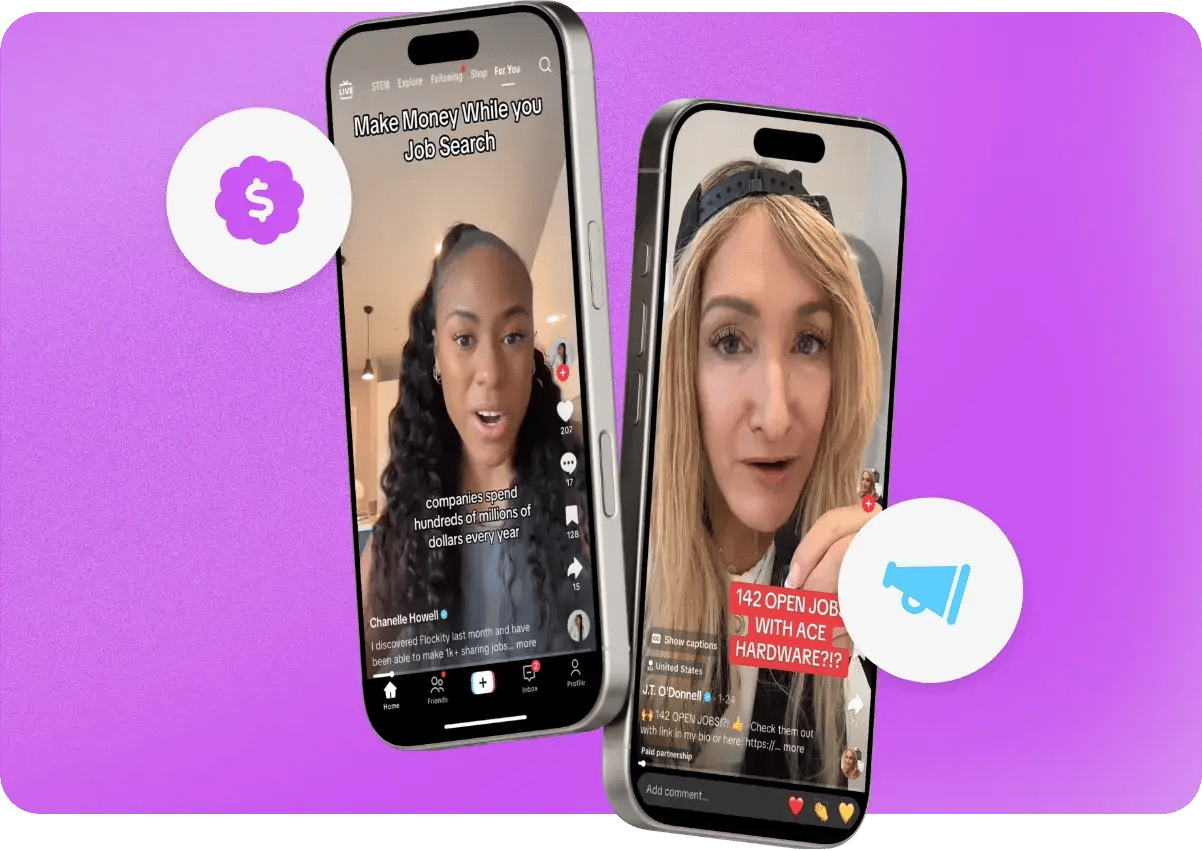
This is where job discovery becomes strategically important. Rather than relying exclusively on people to seek out open roles, employers can create more opportunities for jobs to reach people in the digital spaces where they already spend their time. Social feeds, creator content, employee perspectives, and people-powered distribution can help introduce employers to audiences beyond those already engaging with their brand or searching for their next move.
For some employers, this is an incremental opportunity to build awareness and strengthen their talent pipeline. For others, it may address a more immediate business problem: a persistent shortage of qualified applicants, difficulty reaching specialized talent, or overreliance on a limited set of recruiting channels.
The distinction matters because not every employer has the same discovery problem. An organization receiving plenty of qualified applicants but struggling with application completion may need to focus on its candidate experience. An employer with strong conversion rates but too few relevant visitors may need to expand its reach. A company entering a new market may need to build awareness before it can expect meaningful candidate demand.
Understanding where the problem lies is the first step toward choosing the right solution.
It also changes how employers should evaluate their recruiting investments. Traditional measures such as cost per application, cost per hire, and time to fill remain essential. But when the challenge is reaching people who haven't encountered the employer before, those metrics don't always tell the whole story. Teams may also need to examine net-new career-site visitors, incremental audience reach, the cost of attracting new audiences, and the contribution of discovery to applicant growth.
These measures help answer a different question: Is our recruiting strategy simply converting the demand already available to us, or is it helping expand the pool of people who might consider working here?
That question becomes particularly important when organizations face persistent talent shortages. If a business depends on specialized expertise, operates in a highly competitive hiring market, or needs to attract people who aren't actively searching, the ability to reach beyond the usual candidate pool can become a meaningful advantage. Discovery doesn't guarantee a hire, but it can create opportunities that would otherwise never enter the recruiting process.
At Flockity, we believe employers need both sides of the equation. They need effective ways to connect with people actively looking for work, and they need ways to help opportunities reach people who aren't looking yet. Our people-powered approach to job discovery helps employers distribute jobs through creators and other trusted voices, extending the reach of career opportunities beyond the audiences employers already attract.
The objective isn't to replace established recruiting channels or add another tactic simply because it's new. It's to recognize when an existing approach is being asked to solve a problem it wasn't designed to solve.
If your challenge is converting the candidates you're already reaching, focus on conversion. If your challenge is reaching enough of the right candidates, improving conversion alone won't close the gap.
Sometimes, the next recruiting breakthrough doesn't come from getting more out of the same audience. It comes from discovering an entirely new one.
And that begins with asking a different question: Not just how do we attract the people looking for us, but how do we help the right people discover us?