

People don't experience the world through corporate career pages. They experience it through conversations, recommendations, stories, and the people they choose to listen to. Yet when it comes to recruiting, employers often put most of their energy into what they publish themselves, hoping the right people will find it.
There's an opportunity hiding in plain sight: the people who help us discover our next favorite brand, learn a new skill, or consider a different perspective can also help us discover our next career opportunity.
Think about the last time you seriously considered a recommendation. Maybe a friend introduced you to a product. A creator explained something in a way that finally clicked. A colleague shared what it was really like to work somewhere. The recommendation mattered not only because of the information itself, but because of who shared it and the context in which you encountered it.
Career discovery works in much the same way. A job description can explain responsibilities and qualifications. An employer's career site can communicate its benefits and culture. But a person sharing an opportunity can add something those assets often struggle to convey: a human perspective that helps someone understand why the opportunity might matter to them.
This is where trust enters the job discovery equation.
Trust doesn't mean every recommendation is automatically persuasive, or that people always believe content shared by someone they follow. Audiences are discerning, and overly polished or obviously promotional content can undermine credibility. The value comes from relevance, authenticity, and context. When an opportunity reaches someone through a voice they already choose to engage with, it has a chance to become more than another job listing in a crowded digital landscape.
Consumer brands have recognized the power of this dynamic. Influencers and creators help products travel through networks of interest, expertise, and personal connection. Their value isn't simply the number of followers they have. It's their ability to create content that resonates with a particular audience and introduces something worth considering. For employers, the same principle creates new possibilities for reaching people who may never follow a company page or visit a career site on their own.
Employees can be especially powerful voices because they bring lived experience. A team member talking about a career path, a meaningful project, or an aspect of their workplace can help make an employer feel more tangible to someone on the outside. Professional creators can bring a different advantage: established audiences, subject-matter expertise, and an ability to make career topics engaging in the environments where people already spend time.
Neither approach needs to replace traditional employer branding or recruitment marketing. Instead, people-powered distribution can extend their reach. An employer can have a compelling story, but that story becomes more discoverable when it travels beyond the channels the employer directly controls.
The important distinction is that people aren't just another advertising placement. They bring their own voices, audiences, and reasons for sharing. Treating them as interchangeable media inventory misses the very thing that makes their participation valuable. Effective programs give people room to communicate authentically, provide clear information about the opportunities they're sharing, and respect the relationship they've built with their audience.
Of course, trust alone doesn't solve the discovery challenge. A recommendation still needs to reach a relevant person. The opportunity still needs to be compelling. And employers still need to understand whether their investment is creating meaningful results. That's why people-powered distribution works best as part of a broader job discovery strategy, connecting authentic human voices with intentional distribution and measurable outcomes.
It also raises an important question for talent acquisition leaders: Are you measuring only the attention your employer generates directly, or are you also considering the reach and engagement created when other people help your opportunities travel?
Impressions, engagement, net-new career-site visitors, and incremental audience reach can help reveal different parts of that picture. Over time, employers can also examine whether people-powered discovery contributes to new applicant activity and stronger talent pipelines. The objective isn't to assume that trust guarantees conversion. It's to understand how trusted voices can help create opportunities for discovery that might not otherwise happen.
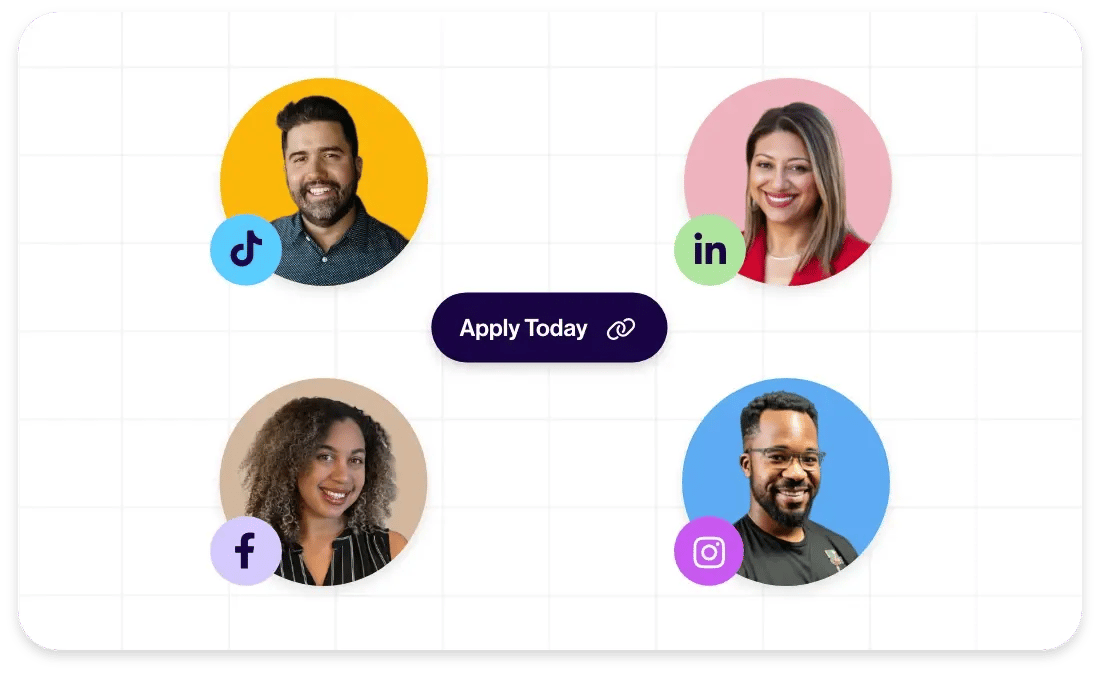
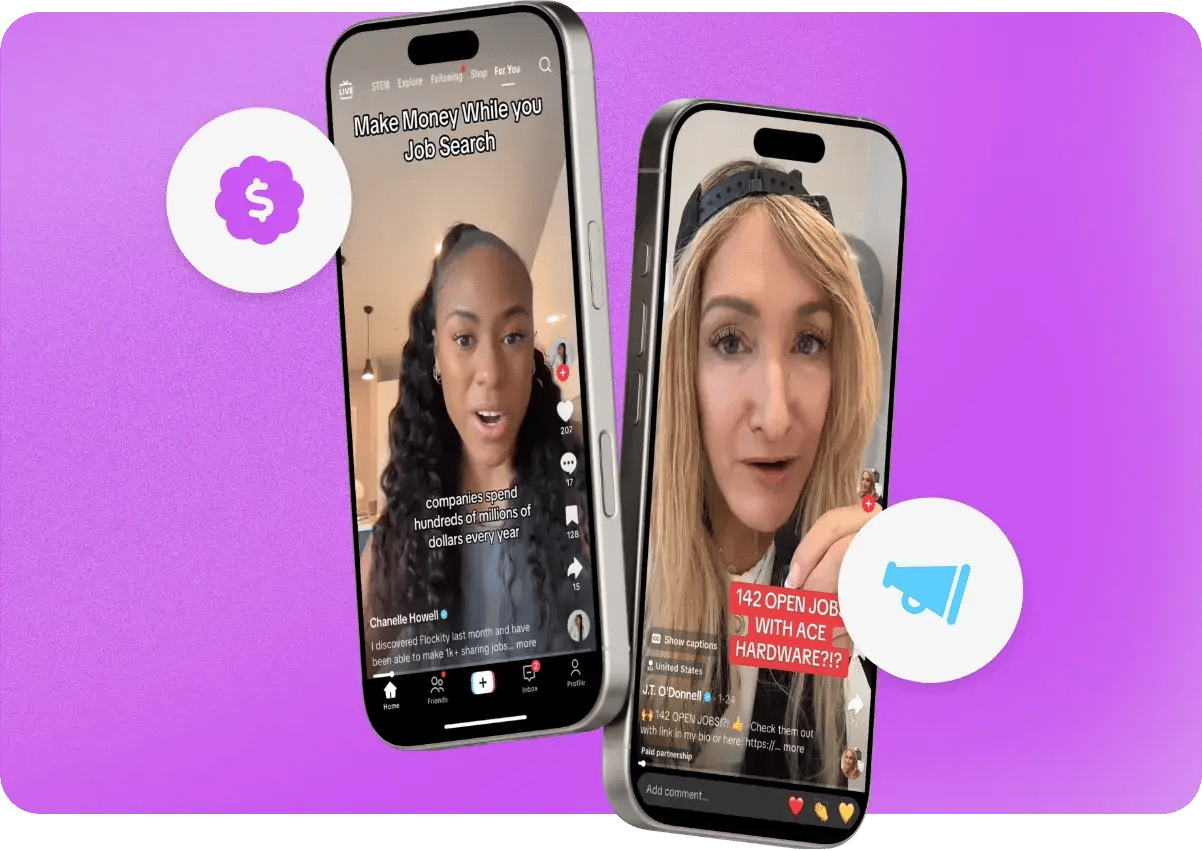
At Flockity, people are central to how we think about job discovery. We help employers distribute jobs through creators and other people who can introduce opportunities to audiences beyond the employer's existing reach. The goal is to make jobs more discoverable in the places people already spend their time, while recognizing that the human context surrounding an opportunity can be just as important as the opportunity itself.
The future of recruiting won't be built on algorithms alone, nor will it be built on human connection without thoughtful distribution. It will come from understanding how the two work together: technology helps opportunities travel, and people give those opportunities context, relevance, and a reason to be considered.
Because a job can be visible without being memorable. It can be promoted without being trusted. And it can be available without ever being discovered by the person who would be perfect for it.
The opportunity is to bring people back into the way jobs travel — and to recognize that sometimes, the most effective path to a new audience begins with a voice that audience already wants to hear.