

For years, recruitment marketing has been organized around channels. Job boards, programmatic advertising, social media, employee referrals, career sites. Each has its own budget, its own metrics, and often its own strategy. But talent doesn't experience recruitment marketing in neat little channel categories. People move between platforms, discover employers in unexpected places, hear about opportunities from people they trust, and explore possibilities long before they decide to apply.
Perhaps it's time to rethink the equation.
Consumer marketing has already embraced the idea that reaching an audience takes more than one touchpoint. Brands build awareness through multiple channels, create familiarity through repeated exposure, and make it easy for interested audiences to take the next step. Recruitment marketing can benefit from the same thinking.
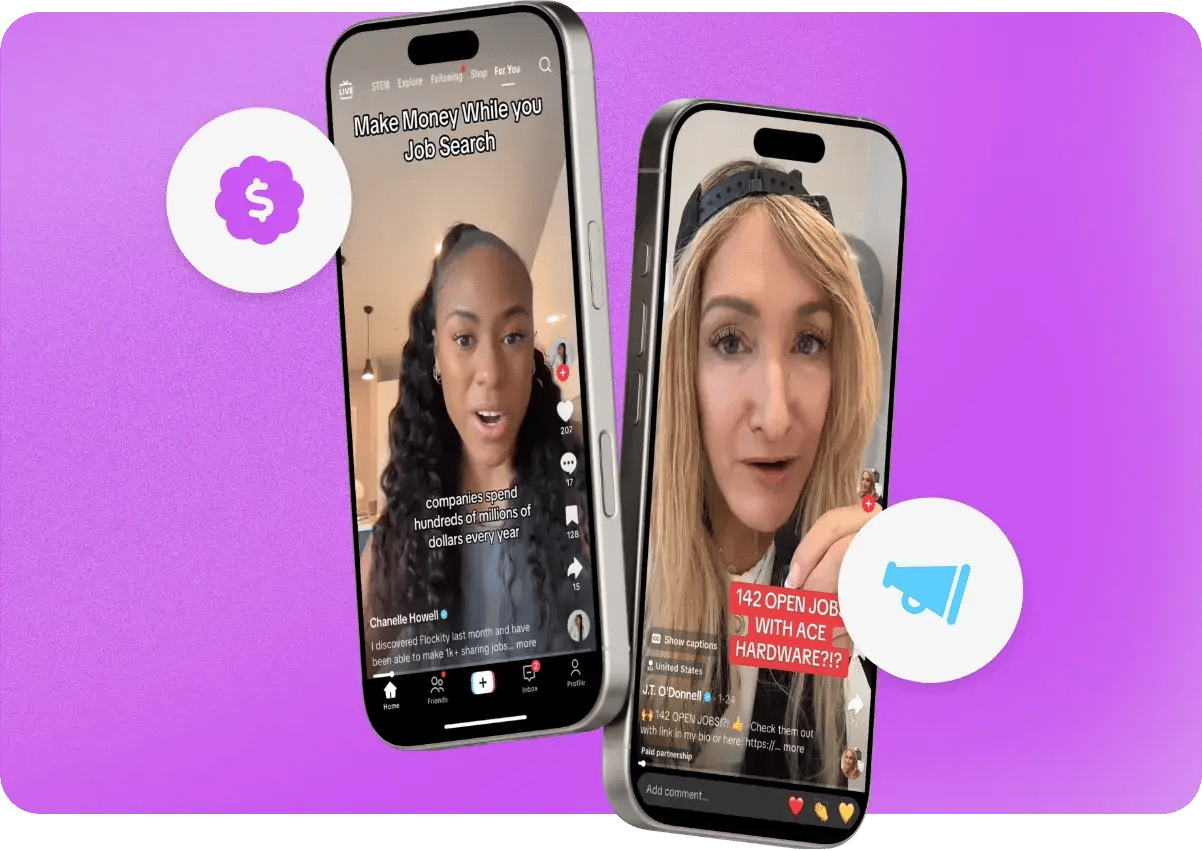
Job boards and programmatic advertising remain valuable. They help employers connect with people actively searching for opportunities. But they aren't designed to reach everyone. Social platforms, creators, and employee influencers introduce a different dimension: the ability to put opportunities in front of people who may not be looking but could be open to the right next move. These channels don't have to compete. They can complement one another, expanding the audience and creating more ways for talent to discover an employer.
The real opportunity is to make these channels work together. Think of recruitment marketing as an interconnected ecosystem, where each channel plays a role in reaching, educating, and engaging potential talent. At Flockity, we call this the Flockity Orbit Model. It's a way of thinking about distribution that puts people, discovery, and incremental reach at the center rather than treating every channel as an isolated investment.
Of course, an interconnected strategy needs an equally connected approach to measurement. It's not enough to count clicks across multiple platforms. Employers need to understand which channels are introducing new audiences, which are creating meaningful engagement, and how discovery contributes to career-site visits and applications. And all of that measurement needs to start with real human activity, not inflated traffic or bot-driven engagement.
The future of recruitment marketing isn't about finding one perfect channel or abandoning the ones that already work. It's about understanding how different channels contribute to a bigger picture, and making sure we're reaching people at more moments in their journey.
The best recruitment marketing strategies won't simply compete for the same candidates. They'll create more opportunities for people to discover what's possible.
More channels. More discovery. One connected strategy.