

Let's have a little talk about job descriptions. Recruiting has spent years trying to make them better. Shorter. More inclusive. More compelling. Less corporate. More human.
We've debated titles. Rewritten requirements. Removed unnecessary qualifications. Added salary ranges. Run them through AI.
All good things.
But here's the problem:
A better job description doesn't solve a distribution problem.
Because before someone can read your job description, they have to find it.
And that's where things get interesting.
Your job description is the destination.
Think about the last time you discovered something on social media.
A restaurant.
A pair of shoes.
A vacation spot.
A new creator.
You probably didn't start your day thinking:
"Today I'm going to search for a restaurant I've never heard of."
Something appeared.
It caught your attention.
You got curious.
Then you went looking for more information.
That's discovery.
Jobs work the same way.
The job description is where someone goes when they're interested.
It isn't necessarily what makes them interested in the first place.
Yet we keep putting the burden on the job description.
Recruitment marketing often starts at the bottom of the journey.
Here's the job.
Here's the description.
Here's the career site.
Here's the application.
Then we ask:
Why aren't enough people applying?
So we optimize the copy.
Maybe we rewrite the headline.
Maybe we add a video.
Maybe we shorten the requirements.
Maybe we run A/B tests.
Again: all useful.
But if the only people seeing the job are the people already searching for it, we're optimizing the last mile of a journey that never started.
What if the job found them first?
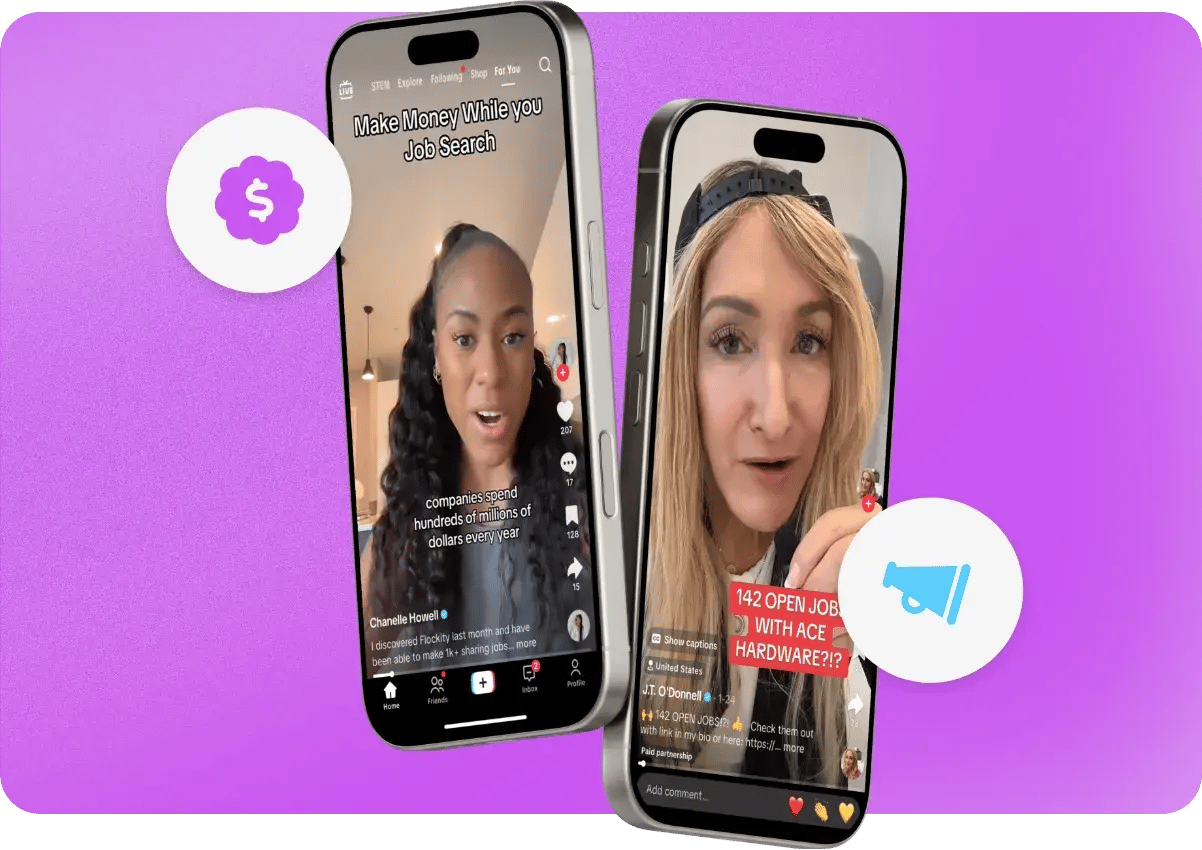
Imagine you're scrolling through TikTok.
You're not job hunting.
You're watching videos.
Then someone you follow talks about working in healthcare.
You stop.
You learn something interesting about their job.
You discover the company.
You see that they're hiring.
You click.
Now you're looking at a job description.
That's a completely different sequence.
Discovery → curiosity → consideration → search.
Not:
Search → job board → job description.
And that distinction matters enormously.
Because the second journey only reaches people who have already raised their hands.
The first can reach people who never intended to look.
That's the giant opportunity hiding in plain sight.
Recruitment marketing has historically been very good at capturing demand.
Someone searches for a software engineering job in Austin.
We want our job to show up.
Someone searches for "marketing jobs."
We want our job to show up.
Someone visits our career site.
We want them to see the right opportunity.
That's demand capture.
But social gives us something else:
Demand creation.
Or, more accurately, discovery creation.
You can introduce someone to an opportunity before they know they're interested.
That's why the content surrounding a job matters.
The employee story.
The creator talking about the role.
The behind-the-scenes video.
The “here's what I actually do all day” post.
The weird little moment that makes someone think:
Wait. That's a job?
Those aren't replacements for the job description.
They're the things that get someone there.
The job description still has a job.
A very important one.
When someone arrives, it needs to answer the questions that matter.
What is this job?
What will I actually do?
What are you looking for?
What's the compensation?
Where is it?
Why should I care?
But expecting the job description to also create awareness, build trust, tell your employer story, generate curiosity and drive discovery?
That's asking one piece of content to do the work of an entire ecosystem.
Let the job description be the destination.
Build more ways for people to discover the road there.
This is why job discovery matters.
The future of recruitment marketing isn't about abandoning job search.
It's about recognizing that search is increasingly downstream from discovery.
People don't need to wake up wanting a job from your company.
They just need to encounter something interesting enough to make them curious.
Then your job description gets its moment.
Because the goal isn't to make someone read a better job description.
The goal is to give more people a reason to want to read one.
And that starts long before the application.