


We have a confession to make.
Recruitment marketing has a measurement problem.
Not because we're measuring too little.
Because we're measuring the wrong things in the wrong way.
For years, we've borrowed the measurement playbook from advertising:
How many people saw it?
How many clicked?
How many applied?
How much did each application cost?
All perfectly reasonable questions.
But recruitment marketing isn't a billboard.
And it certainly isn't a vending machine where you put in $1 and get one candidate out.
Especially when you're trying to reach people who weren't looking for a job in the first place.
A click is an outcome. It's not the whole story.
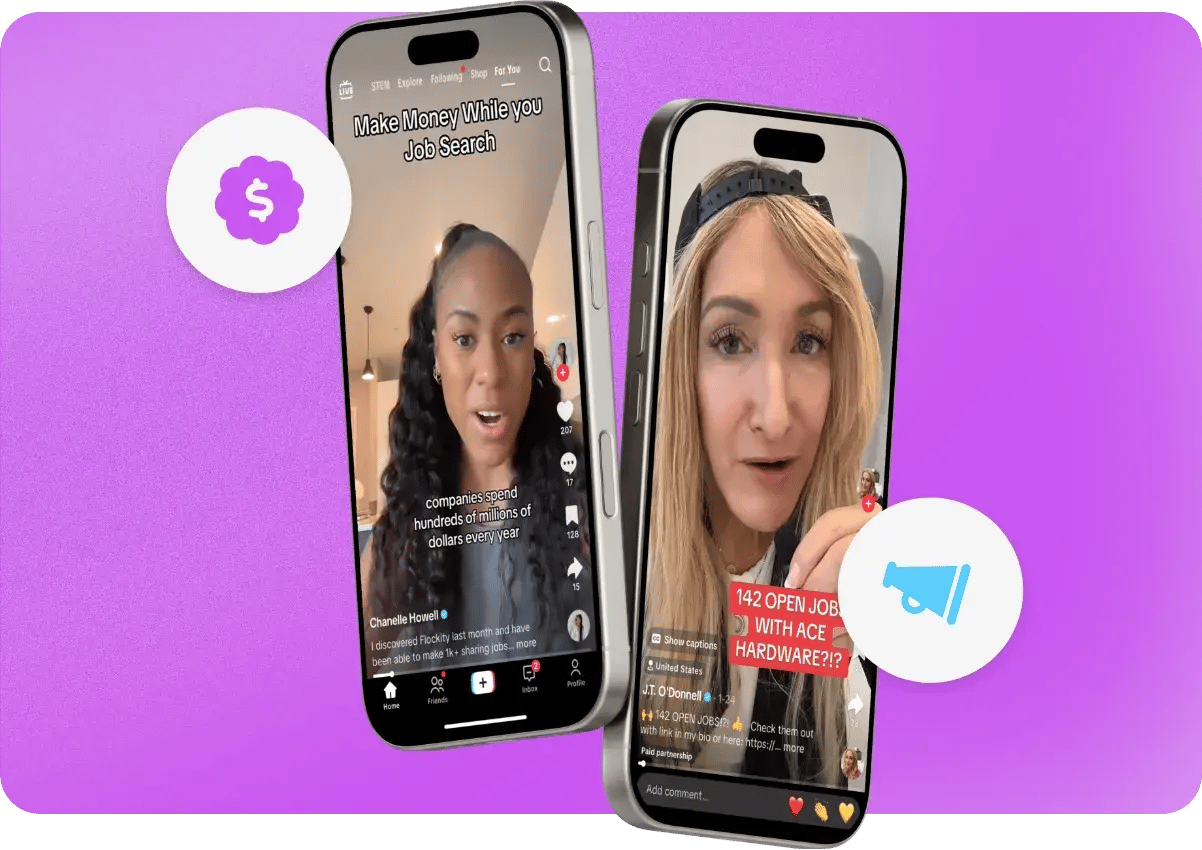
Imagine a creator shares a job with their audience.
The post gets 80,000 views.
2,400 people click.
That's great.
But what if those 2,400 clicks came from an audience your employer has never reached before?
What if the post introduced your company to thousands of people who now recognize the brand?
What if you learned that this creator's audience responds incredibly well to your healthcare roles—but not your corporate roles?
What if another creator reaches a completely different talent pool?
What if one particular message consistently makes people stop scrolling?
Those aren't footnotes to the campaign.
They're the campaign intelligence.
And they're exactly the kind of things that can make your next 50 jobs perform better than your last 50.
Recruitment marketing is not a single transaction.
This is where the traditional media mindset starts to fall apart.
A billboard has a pretty straightforward job.
Get attention.
You measure estimated impressions, maybe engagement or response, and move on.
But modern recruitment marketing can create a feedback loop.
You put an opportunity into the world.
People respond.
You learn something.
You adjust.
You distribute another opportunity.
You learn more.
Over time, you begin to understand how your employer, your jobs and your audiences interact.
That's not just media performance. It's market intelligence.
And the more jobs you're hiring for, the more valuable that intelligence becomes.
The question isn't just “Did it work?”
Of course we want to know whether something worked.
But “Did it work?” is a pretty blunt instrument.
A better set of questions sounds more like:
What worked?
For whom?
Where?
Why?
What surprised us?
What should we do again?
What should we stop doing?
What did we learn that we can apply to the next job?
Now we're getting somewhere.
Because a campaign that generates 5,000 clicks and teaches you nothing isn't necessarily more valuable than a campaign that generates 2,500 clicks and reveals a completely new audience for your hardest-to-fill roles.
One produced a number.
The other produced a signal.
This matters even more when you have a lot of jobs.
If you're hiring for one role, you can obsess over the performance of that role.
But if you're hiring for hundreds of jobs, the game changes.
You have enough volume to see patterns.
Maybe manufacturing roles consistently perform better with one type of creator.
Maybe candidates respond more strongly to employee stories than polished employer-brand messaging.
Maybe certain audiences are wildly interested in jobs you assumed nobody wanted.
Maybe your strongest traffic isn't coming from the places you've traditionally invested.
That is incredibly valuable information.
Because now your recruitment marketing isn't simply answering:
“How did this job perform?”
It's answering:
“How does our hiring actually move through the market?”
That's a much bigger question.
And this is where campaigns start to compound.
The best recruitment marketing programs don't simply produce results.
They produce better inputs for the next campaign.
You learn which audiences matter.
Which messages resonate.
Which creators deliver.
Which jobs create curiosity.
Which channels drive meaningful traffic.
Which approaches aren't worth repeating.
Then you use those learnings.
That's the compounding effect.
The first campaign gives you data.
The next campaign gives you context.
The campaigns after that give you patterns.
And eventually, you're no longer guessing how to reach your talent.
You're getting smarter about it.
So yes, measure the clicks.
Please.
Measure applications. Measure conversion. Measure engagement. Measure cost.
But don't stop there.
Because if you're only looking at the final number, you're throwing away everything the campaign taught you along the way.
And in a world where people discover jobs long before they decide to apply, learning how discovery works may be one of the most valuable things your recruitment marketing can deliver.
Don't just ask whether the campaign worked.
Ask what it taught you.
Then use that to make the next one better.