
Recruitment marketing has never had more places to put a job.
LinkedIn.
TikTok.
Instagram.
YouTube.
Job boards.
Programmatic.
Career sites.
Employee networks.
Creators.
AI search.
And yet somehow, we're still having the same conversation:
“How do we reach more candidates?”
Maybe we don't have a channel shortage.
Maybe we have a channel problem.
We're still treating channels like buckets.
Put the job on LinkedIn.
Put it on Indeed.
Run some social ads.
Ask employees to share it.
Send people to the career site.
Then look at the numbers and decide which channel “worked.”
But people don't experience your recruitment marketing that way.
They don't live inside your channel strategy.
They live inside their own attention.
They scroll.
They search.
They watch.
They follow people.
They ask AI.
They click something interesting.
They ignore 47 things.
Then, occasionally, something gets through.
That's the reality we're marketing into.
Different channels do different jobs.
This is where I think recruitment marketing gets unnecessarily complicated.
We're constantly looking for the channel.
The channel that reaches passive candidates.
The channel that converts.
The channel with the lowest cost per applicant.
The channel Gen Z likes.
The channel that hiring managers understand.
But there probably isn't one.
Because discovery and conversion aren't the same job.
A social feed might introduce someone to your company.
A creator might make the opportunity feel relevant.
An employee might add credibility.
An AI assistant might answer a question.
A career site might provide the proof.
A job board might capture someone who is actively searching.
These aren't competing channels.
They're different moments in the same journey.
This is something we really appreciate about our friends at Adway.
Adway has been talking about employer brand activation as the bridge between building the brand and actually getting it seen—turning employer-brand content into continuous social distribution rather than letting great content sit idle.
That's an important distinction.
Because we don't need fewer channels.
We need to get much smarter about what each channel is actually supposed to do.
Adway's strength is activating the employer brand through paid, programmatic social distribution.
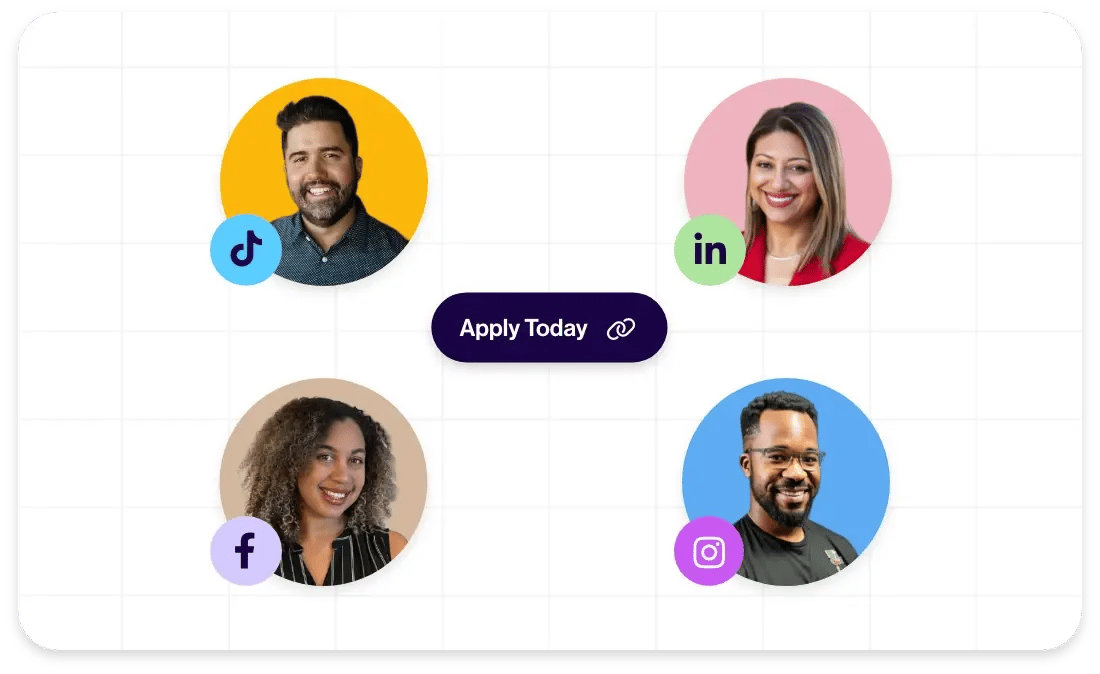
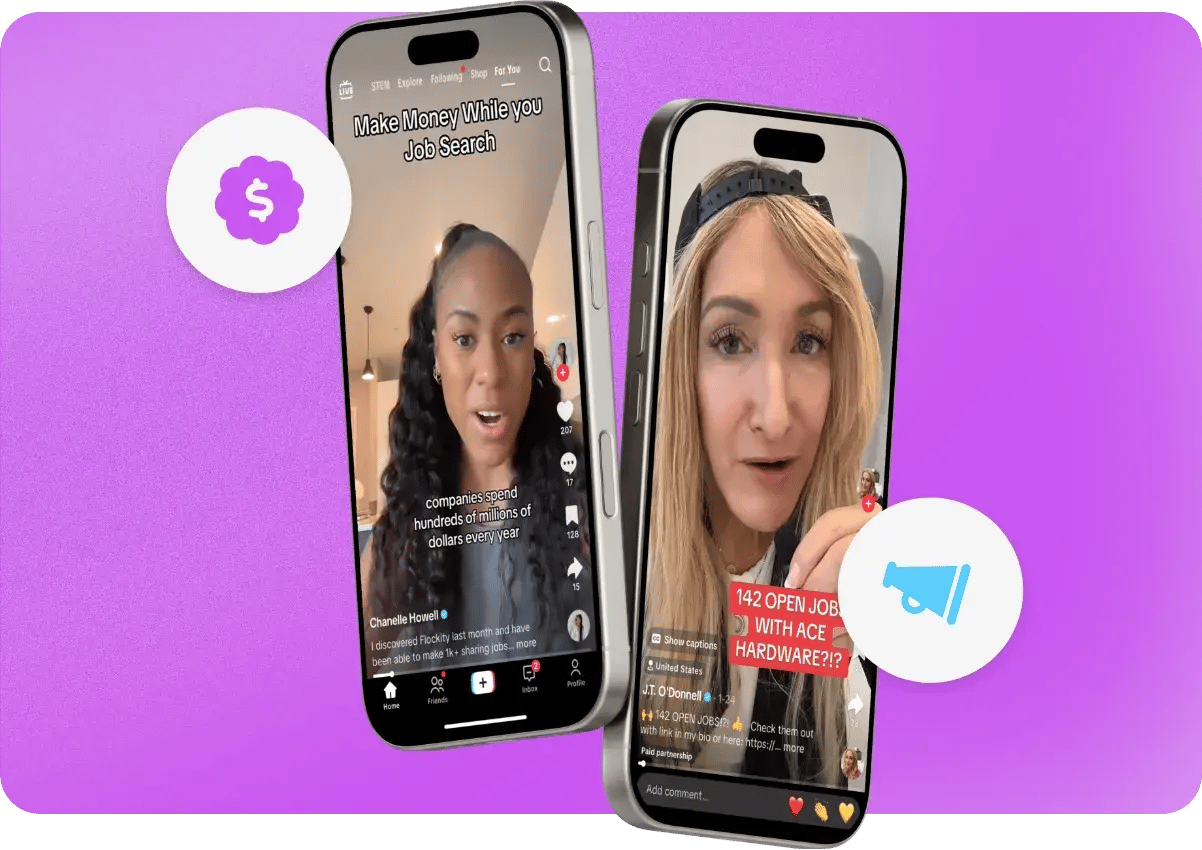
Flockity comes at the problem from a different direction: putting jobs and employer opportunities into the hands of people who can introduce them to their own audiences.
Different mechanisms.
Same bigger question:
How do we get opportunities in front of people who aren't already looking?
And honestly?
We think talent teams need both ways of thinking.
Stop asking which channel wins.
Start asking what job the channel is doing.
Is it creating awareness?
Driving discovery?
Building trust?
Capturing existing intent?
Reinforcing the employer brand?
Converting interest?
Re-engaging someone who already knows you?
That's a much more useful conversation than:
“What's our best source of applicants?”
Because the channel that creates the first spark may not be the channel that gets the application.
And that's okay.
A person might discover your company through a creator.
See an employer-brand ad two weeks later.
Ask AI about the company three months later.
Visit the career site.
And apply six months after that.
If we're only giving credit to the final click, we're missing the entire story.
The future is less about channels and more about ecosystems.
This is the shift I think we're going to see in recruitment marketing.
Instead of:
Job → Channel → Application
we start thinking:
Discovery → Trust → Consideration → Search → Application
And different channels—and different people—can play different roles along the way.
That's a much more human way to think about recruitment marketing.
Because candidates aren't moving through your funnel.
They're living their lives.
Your job is to show up in the moments when your opportunity is actually relevant to them.
Sometimes that's a job search.
Sometimes it's a TikTok.
Sometimes it's an employee recommendation.
Sometimes it's an AI answer.
Sometimes it's an ad.
Sometimes it's a friend saying:
“Hey, you should check this out.”
So, no. You don't need another channel.
You need a better understanding of the ones you already have.
You need to know where discovery happens.
Where trust happens.
Where intent happens.
Where conversion happens.
And how those moments connect.
Because the goal isn't to make every channel do everything.
The goal is to make the ecosystem work together.
That's when recruitment marketing gets really interesting.
Not more channels.
Better orchestration.
And maybe that's the real opportunity in front of us:
Stop asking, “Where should we post the job?”
Start asking:
“Where could someone discover it?”